Phone:
(701)814-6992
Physical address:
6296 Donnelly Plaza
Ratkeville, Bahamas.

Phone:
(701)814-6992
Physical address:
6296 Donnelly Plaza
Ratkeville, Bahamas.
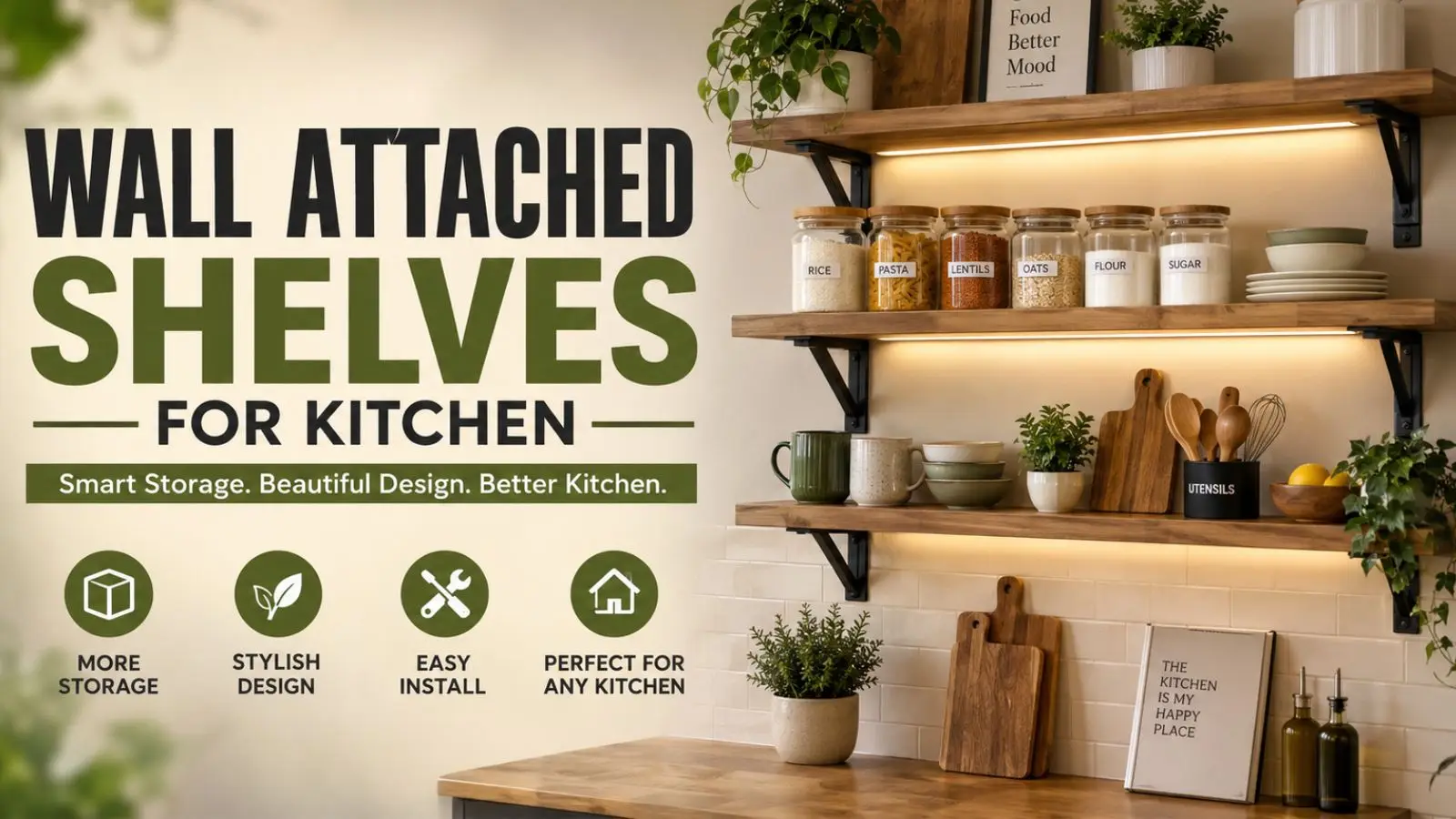
Discover stylish wall-attached shelf designs for kitchens, smart storage solutions for small spaces, installation tips, and easy DIY shelf ideas that can improve both the functionality and appearance of your kitchen.
Kitchen storage has a way of disappearing faster than we expect. Even with enough cabinets and drawers, there always seems to be another spice jar, coffee mug, cooking tool, or small appliance that needs a proper place.
That is where wall-attached shelves can make a big difference. They add extra storage without using valuable floor space, keep frequently used items within reach, and can completely change the look of a kitchen wall.
Over the years, I have seen how simple wall shelves can solve everyday kitchen problems. I have used them in small apartment kitchens where every inch mattered, in family kitchens that needed better organization, and even in rental homes where permanent changes were not an option.
Some shelves were installed purely for storage, while others became attractive design features that made the kitchen feel warmer and more personalized.
In this guide, I will share practical wall shelf designs, small kitchen storage ideas, installation tips, and beginner-friendly DIY projects that can help you create a more organized and beautiful kitchen.
In This Guide, You’ll Learn
Choosing the right shelf design depends on your kitchen style, available space, and storage needs. Some people want shelves mainly for organization, while others want them to add personality to an empty wall.
In my experience, the best kitchen shelves are the ones that balance both function and design.
Floating Wooden Shelves
Floating wooden shelves are one of the most popular choices for modern kitchens, and for good reason. Their simple design creates a clean look without making the kitchen feel crowded.
Unlike bulky cabinets, floating shelves keep the room feeling open while still providing useful storage space.
I especially like using them for:
Natural wood finishes are especially effective because they bring warmth into kitchens that may otherwise feel too plain or cold.
A light oak finish can create a bright Scandinavian look, while darker wood tones can add a more traditional or rustic feel.
Metal and Wood Combination Shelves
For kitchens that need a little more character, wood and metal shelves are an excellent choice.
The combination of natural wood with black or industrial-style metal creates a balanced look that feels both modern and practical.
These shelves work particularly well in:
I like this style because the materials complement each other. The wood adds warmth, while the metal provides strength and a stylish visual contrast.
Corner Wall Shelves
Kitchen corners are often overlooked spaces. Many homeowners focus on countertops and cabinets but forget that empty corners can provide valuable storage opportunities.
Corner wall shelves help turn those unused areas into functional spaces.
They are great for storing or displaying:
A well-designed corner shelf can make a small kitchen feel more organized without taking up extra room.
Multi-Level Wall Shelves
When storage is the main goal, multi-level wall shelves are a smart solution.
Instead of expanding outward, these shelves use vertical space by stacking multiple levels on one wall. This makes them especially useful in smaller kitchens where countertop and cabinet space are limited.
I often recommend vertical shelving for apartments and compact kitchens because it provides extra storage without making the room feel smaller.
Open Shelving Above Countertops
Installing open shelves above countertops is one of the easiest ways to improve kitchen convenience.
This area is perfect for items you use every day, such as:
Having these items within arm’s reach makes cooking easier and creates a more efficient workspace.
The key is to keep the shelves organized. Too many items can quickly make open shelving look messy, so I usually recommend combining practical storage with a few decorative touches.
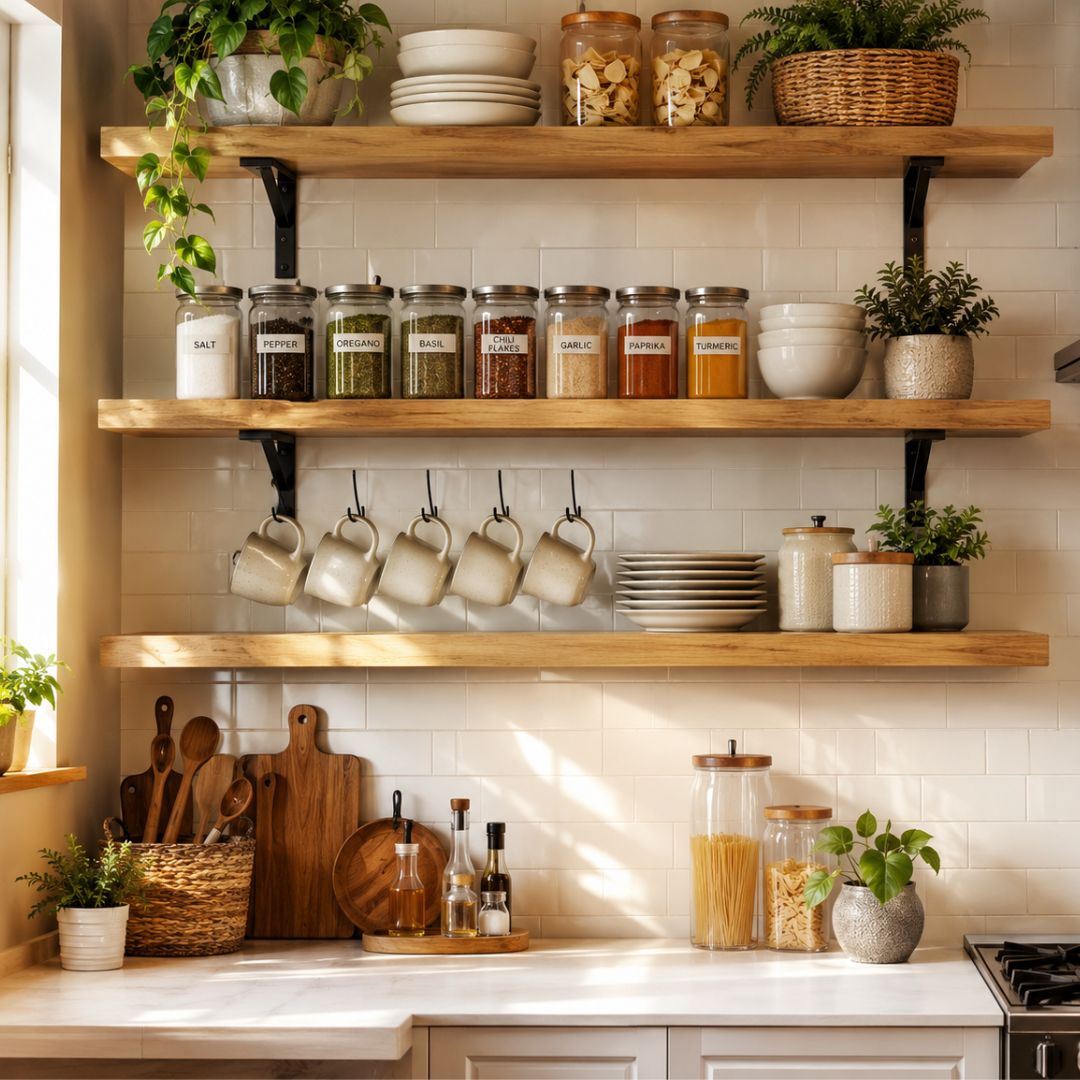
Wall Shelf Ideas for Small Kitchen Storage
Small kitchens often require smarter storage solutions because every inch of space matter. From my experience, wall-mounted shelves can sometimes be more useful than adding another cabinet because they keep essential items visible, accessible, and easy to organize.
A well-planned shelf system can make a small kitchen feel larger while reducing countertop clutter.
Create Dedicated Storage Zones
One simple organization method I use is creating specific zones for different kitchen needs.
Instead of placing random items wherever there is empty space, I prefer giving each shelf a clear purpose.
For example:
This approach makes daily routines easier because everything has a specific place. It also prevents shelves from becoming crowded and difficult to manage.
Make Use of Vertical Space
Many kitchens have unused wall space that could provide valuable storage. People often focus only on cabinets and countertops while forgetting that the walls can work just as hard.
Installing shelves higher on the wall allows you to store more items without reducing your available counter space.
For small kitchens, vertical storage is especially helpful because it adds functionality without making the room feel cramped.
Store Items in Clear Containers
Clear storage containers are one of my favorite ways to keep kitchen shelves looking organized.
They make ingredients easy to identify and help you notice when supplies need to be replaced.
I often use glass jars or transparent containers for storing:
Besides being practical, clear containers also create a cleaner and more attractive shelf display.
Add Hooks Beneath Shelves
The space underneath a shelf is often ignored, but it can provide additional storage opportunities.
Adding small hooks below wall shelves allows you to store frequently used items without taking up extra shelf space.
They are useful for hanging:
This small addition can make a noticeable difference, especially in kitchens where storage space is limited.
Use Narrow Shelves for Spices
When organizing spices, deeper shelves are not always the best option.
Narrow wall shelves work better because they keep spice containers visible and easy to access. You can quickly find what you need while cooking without moving several jars around.
A simple spice shelf near the cooking area can save time and keep your countertop cleaner.
How to Install a Wall Attached Shelf in the Kitchen
A beautiful shelf is only useful if it is installed securely. Whenever I install wall shelves, I always focus on safety and stability before thinking about decoration.
A properly installed shelf should not only look good but also handle everyday kitchen use.
Step 1: Choose the Right Location
The first step is finding the best place for your shelf.
I usually look for areas where the shelf will be convenient but will not interfere with cabinets, appliances, or normal kitchen activities.
Some ideal locations include:
Before drilling, I also consider what items will be stored there. A shelf for heavy dishes needs stronger support than one used only for decoration.
Step 2: Find Wall Studs
Locating wall studs is one of the most important parts of shelf installation.
Wall studs provide much stronger support than drywall alone. Attaching shelves directly into studs helps prevent sagging or accidental damage.
I always recommend using a stud finder before drilling any holes, especially when installing shelves that will hold cookware, dishes, or appliances.
Step 3: Measure Everything Carefully
Accurate measurements can make the difference between a professional-looking shelf and one that feels uneven.
Before installation, I measure:
Even a small measurement mistake can become noticeable once the shelf is mounted.
Step 4: Install the Brackets Properly
Once the location is marked, the next step is attaching the brackets.
If the shelf uses visible brackets, I secure them firmly into wall studs whenever possible. A level tool is essential during this step to make sure the shelf stays straight.
A slightly uneven shelf can affect both appearance and stability.
Step 5: Attach the Shelf
After the brackets are securely installed, I attach the shelf according to the hardware instructions.
Before adding kitchen items, I gently test the shelf to make sure it feels stable and properly supported.
It is always better to check the strength first rather than discover a problem later.
Step 6: Style and Organize the Shelf
The final step is arranging your items.
I prefer mixing practical storage with a few decorative elements. For example, a shelf might include everyday plates, glass jars, and a small plant or decorative item.
However, I avoid placing too much weight on one side because balanced weight distribution helps shelves stay secure for a longer time.
A well-organized kitchen shelf should make your daily routine easier while also adding personality to the space.
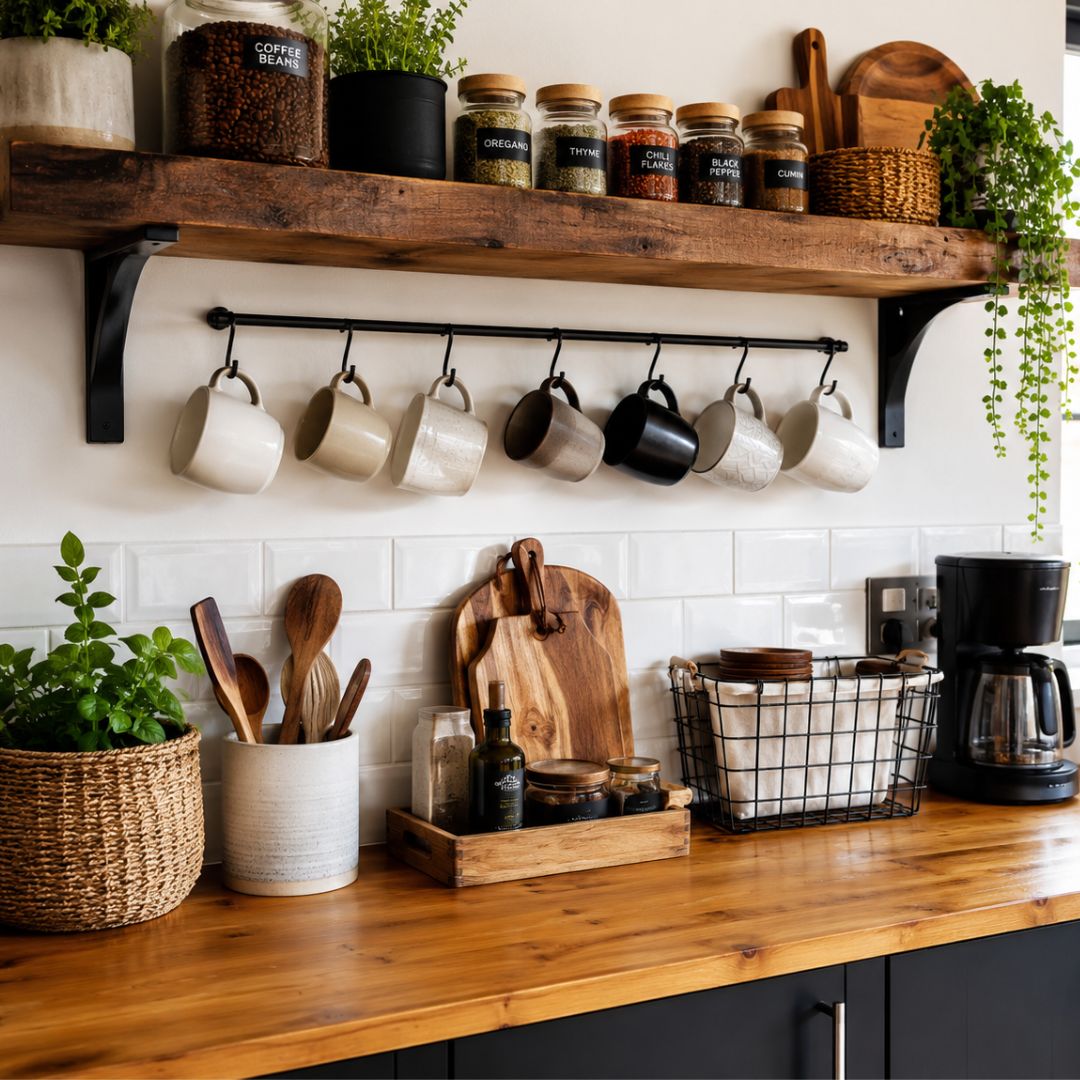
Creating your own kitchen shelves can be easier than many people think. With a few basic tools, affordable materials, and some careful planning, you can build shelves that are both practical and attractive.
I have completed several DIY shelf projects over the years, and I have learned that simple designs often create the biggest impact. You do not always need expensive materials to improve your kitchen storage.
Reclaimed Wood Shelf
A reclaimed wood shelf is one of my favorite DIY projects because it adds natural character to a kitchen.
The small imperfections, unique grain patterns, and aged appearance of reclaimed wood can make a simple shelf feel special.
For a basic version, you usually need:
This type of shelf works beautifully in rustic, farmhouse, and even modern kitchens where you want to add some warmth.
Pipe and Wood Shelf
Industrial-style shelves made from metal pipes and wood have become very popular, and it is easy to understand why.
They are:
The combination of dark metal and natural wood creates a bold look that works especially well in industrial and modern kitchens.
I like using this design for storing heavier items such as cookware, jars, or kitchen accessories because the structure feels solid and reliable.
Floating Shelf Project
For homeowners who prefer a cleaner and more minimal look, floating shelves are a great DIY option.
The hidden mounting system creates the appearance that the shelf is attached directly to the wall without visible brackets.
Floating shelves are ideal for:
Although they look simple, proper installation is important. Strong supports and accurate measurements are necessary to make sure the shelf remains secure.
Coffee Station Shelf
A dedicated coffee shelf can turn an empty kitchen wall into a useful and welcoming coffee corner.
Instead of keeping everything scattered across the countertop, a small shelf can organize your morning essentials in one convenient place.
I usually include:
A coffee station shelf is a simple upgrade that can make your kitchen feel more personalized.
DIY Spice Rack Shelf
A wall-mounted spice rack is another practical project, especially for small kitchens.
Spices often take up valuable cabinet space, and a dedicated shelf keeps them visible and easy to reach while cooking.
A narrow spice shelf near the stove can improve organization and make meal preparation more efficient.
Common Kitchen Shelf Mistakes
Even a beautiful shelf can become frustrating if it is not planned properly. Over the years, I have noticed that many shelf problems come from small mistakes made during installation or organization.
Overloading the Shelves
One of the most common mistakes is placing too many heavy items on a shelf.
A crowded shelf not only looks messy but can also put unnecessary pressure on the brackets and wall.
I always recommend checking the shelf strength before storing heavy cookware, appliances, or large containers.
Ignoring Weight Limits
Every shelf has a maximum weight capacity.
Before installation, consider what you plan to store. A shelf holding decorative items requires much less support than one holding ceramic dishes or kitchen equipment.
Choosing the right hardware from the beginning can prevent problems later.
Poor Placement
A shelf should make your kitchen easier to use, not create obstacles.
I avoid installing shelves where they block cabinet doors, interfere with cooking areas, or make everyday tasks uncomfortable.
The best location is usually somewhere convenient but still out of the way.
Decorating Without a Purpose
Open shelves are great for adding style, but they should also improve functionality.
Too many decorative items can reduce useful storage space and make the kitchen feel cluttered.
I prefer a balanced approach: store everyday essentials on the shelf and add a few decorative touches to create a welcoming look.
Frequently Asked Questions (FAQ)
Ans: In my experience, floating wooden shelves are one of the best choices because they combine storage, style, and flexibility. They work well with many kitchen designs and can be customized according to your available space.
Ans: Yes. Wall-mounted shelves are especially useful in small kitchens because they use vertical space without taking up floor area. They help keep important items accessible while reducing countertop clutter.
Ans: The ideal height depends on your kitchen layout and how you plan to use the shelves. I usually install shelves at a height where frequently used items can be reached comfortably without creating a safety issue.
Ans: Many simple shelf systems can be installed by homeowners with basic tools and proper preparation. However, heavier shelves or shelves holding large kitchen items require stronger support and careful installation.
Ans: Some of my favorite items to store on wall shelves include:
The best items are usually things you use regularly because open shelves make them easy to access.
Wall-attached shelves are one of the easiest ways to improve both the storage and appearance of a kitchen.
Throughout my projects, I have seen how a simple shelf can transform an empty wall into a practical feature that makes everyday kitchen tasks easier.
Whether you are organizing spices, displaying dishes, creating a coffee corner, or building a DIY shelf from scratch, the goal should always be the same: create storage that fits your lifestyle while keeping the kitchen comfortable and attractive.
With the right shelf design, proper installation, and thoughtful organization, even a small kitchen can feel more spacious, efficient, and welcoming.