Phone:
(701)814-6992
Physical address:
6296 Donnelly Plaza
Ratkeville, Bahamas.

Phone:
(701)814-6992
Physical address:
6296 Donnelly Plaza
Ratkeville, Bahamas.
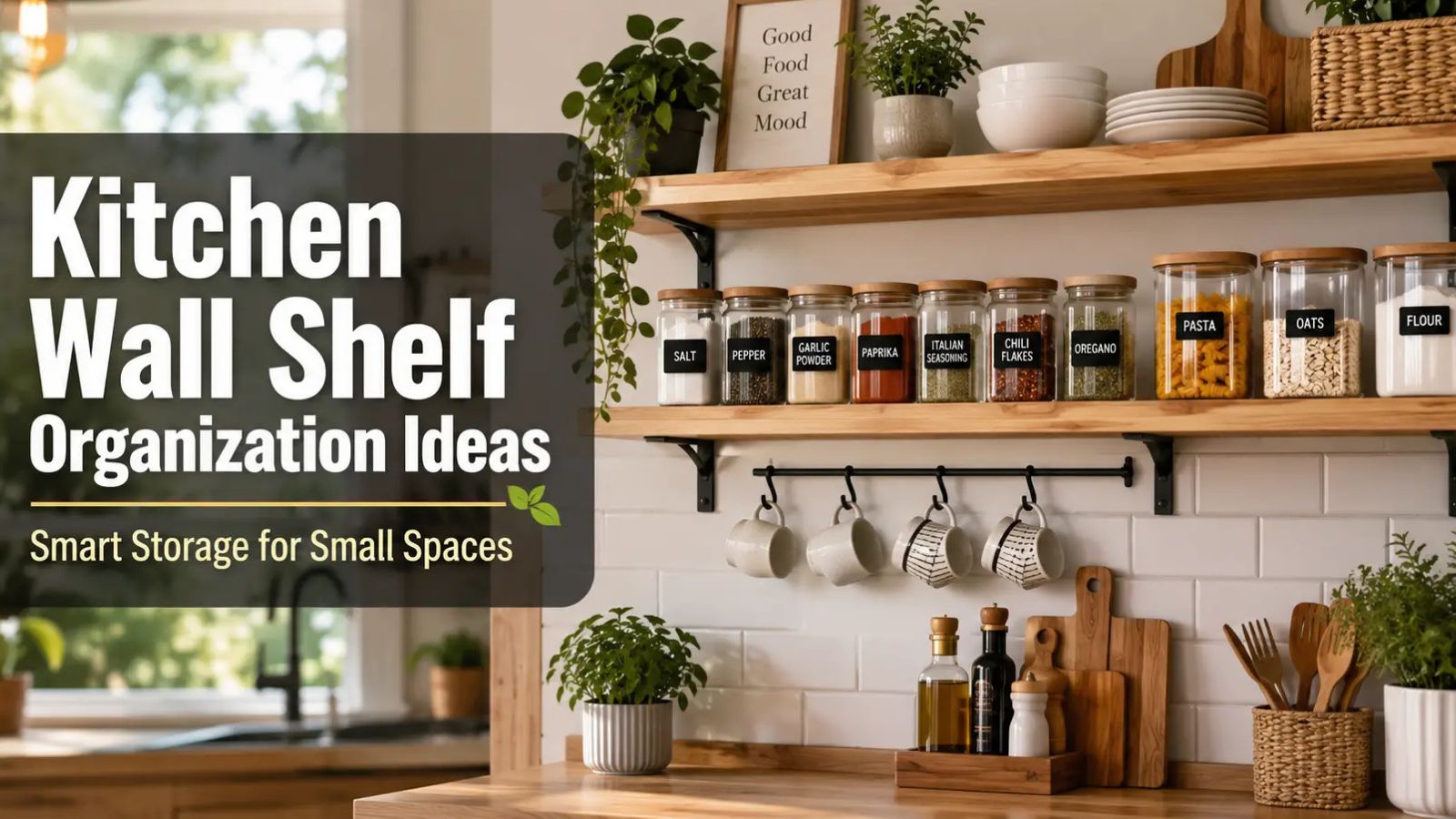
A well-organized kitchen shelf can make every day cooking easier, reduce clutter, and help even the smallest kitchen feel more spacious. Over the years, I’ve seen many kitchens where countertops were overcrowded, cabinets were packed to the brim, and finding everyday essentials became frustrating. Surprisingly, the solution wasn’t adding more storage—it was making better use of the wall shelves that were already there.
When everything has a designated place, cooking becomes more enjoyable. You can quickly find the ingredients you need, keep your favorite items within easy reach, and maintain a kitchen that looks tidy without spending hours cleaning or reorganizing. Whether you live in a small apartment or simply want to make better use of your kitchen space, a few thoughtful changes can make a noticeable difference.
In this guide, I’ll share the organization methods that have worked best for me, along with practical storage ideas, spice organization tips, and simple styling techniques that keep open shelves both functional and attractive.
In This Guide, You’ll Learn
How to Organize a Small Kitchen Shelf
Whenever I organize a small kitchen, I start with one simple principle: every item should have a purpose. In a compact space, there’s no room for things that rarely get used or don’t belong in the kitchen. Before arranging anything, I remove unnecessary items to create a clean starting point.
Group Similar Items Together
Keeping similar items together makes shelves much easier to use and maintain. Instead of placing things wherever there’s space, I create dedicated zones for different categories.
For example, I usually separate:
This simple system saves time while cooking and keeps shelves looking neat instead of cluttered.
Keep Everyday Essentials Within Easy Reach
Items you use every day deserve the most accessible spots. I always keep coffee mugs, cooking oils, salt, pepper, and my favorite seasonings on the lower or middle shelves where they’re easy to grab. Less frequently used items, such as serving dishes or specialty cookware, can be stored on the top shelf.
Use Storage Containers
Small storage containers help prevent shelves from becoming messy. Rather than leaving loose packets or mismatched packaging on display, I like to group similar items together.
Some of my favorite storage options include:
Besides keeping everything organized, these containers also give open shelves a cleaner, more cohesive look.
Make the Most of Vertical Space
One thing many people overlook is shelf height. Even if you don’t have much horizontal space, you can often create extra storage by using the height more efficiently.
Stackable shelf risers or small organizers allow you to create multiple levels, making room for additional dishes, bowls, or pantry items without overcrowding the shelf.
Don’t Overfill Your Shelves
It’s tempting to use every inch of available space, but overfilled shelves quickly become difficult to maintain. Leaving a little empty space not only makes the shelves look cleaner but also makes it easier to reach the items you use most often.
If a shelf feels overcrowded, I usually remove a few items instead of trying to squeeze in more storage solutions.
Best Ways to Store Spice Jars on Wall Shelves
Spices are often one of the most challenging things to organize because they’re small, numerous, and easy to lose among other kitchen items. I used to keep mine in different cabinets and drawers, and finding the right jar while cooking was often frustrating. Creating a dedicated spice shelf made a huge difference.
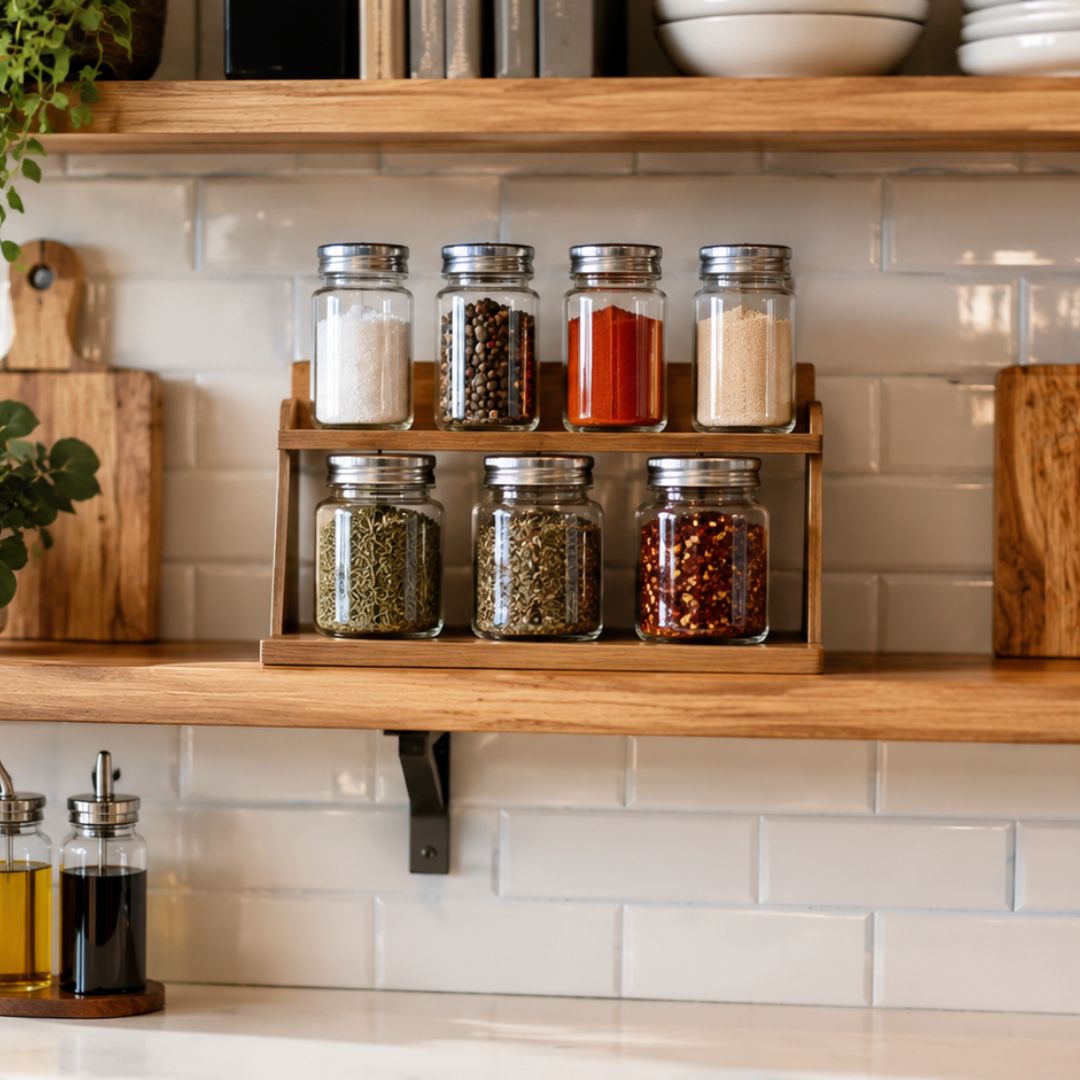
Choose Matching Spice Jars
Using matching containers instantly makes a shelf look more organized. Uniform jars fit together neatly, and clear containers make it easy to see what’s inside without opening each one.
Label Every Jar
Even if you think you’ll remember every spice, similar-looking powders can be surprisingly easy to mix up. Clear, easy-to-read labels save time and make cooking much more convenient.
Arrange Spices by Frequency of Use
I always keep the spices I use most often at the front of the shelf, where they’re easy to reach.
These usually include:
Spices that I use less frequently stay toward the back or on the higher shelves.
Use Tiered Spice Organizers
Tiered organizers are one of the simplest upgrades for a spice shelf. By raising the jars in the back, every label stays visible, so there’s no need to move several containers just to find one spice.
Keep Spices Away from Heat
Whenever possible, avoid placing spice shelves directly beside the stove or oven. Constant heat and steam can reduce the flavor and freshness of many spices over time. A nearby wall shelf that’s away from direct heat is usually a much better choice.
Open Kitchen Shelf Styling Ideas
Open shelves should do more than just hold your kitchen essentials—they should also make the space feel warm and inviting. The key is finding the right balance between practicality and style. A shelf that’s overloaded with random items can look messy, while a thoughtfully arranged one can make the entire kitchen feel brighter and more organized.
Mix Practical and Decorative Items
One approach I use is combining everyday kitchen essentials with a few decorative touches. This keeps the shelves useful without making them feel purely functional.
These simple additions add character while keeping everything within easy reach.
Stick to a Consistent Color Palette
Too many colors and patterns can make open shelving feel busy. I like to keep the overall look simple by choosing a few complementary tones, such as:
A consistent color scheme helps the shelves look cleaner and more intentional.
Create Variety with Different Heights
Shelves look more interesting when everything isn’t the same height. I usually mix taller jars with medium-sized bowls and smaller decorative pieces to create a balanced arrangement.
This small styling trick adds visual interest without making the shelves feel crowded.
Add a Little Greenery
A touch of greenery can make a kitchen feel fresh and welcoming. A small herb plant, such as basil or mint, works especially well because it’s both decorative and useful.
That said, it’s best not to overdo it. One or two small plants are usually enough to brighten the space without taking over the shelf.
Small Kitchen Storage Hacks
When space is limited, every shelf matter. Over time, I’ve found a few simple storage tricks that make even the smallest kitchens feel more functional.
Use Shelf Risers
Shelf risers are one of my favorite storage tools because they instantly create an extra level of space. Instead of stacking bowls or plates on top of each other, risers let you organize them neatly while making everything easier to reach.
Install Hooks Under Shelves
The underside of a shelf often goes unused, but adding a few small hooks can create valuable extra storage.
They’re perfect for hanging:
This frees up shelf space while keeping frequently used items close at hand.
Store Large Items Vertically
Rather than stacking cutting boards, baking trays, and serving platters, I prefer storing them upright whenever possible. Vertical storage makes these items much easier to grab and prevents large piles from forming.
Choose Clear Storage Containers
Clear containers make it easy to see what you have without opening every box or bag. They also give pantry shelves a more uniform appearance by replacing mismatched packaging with a clean, organized look.
Rotate Seasonal Kitchen Items
Not every appliance or serving dish needs to stay on display all year. I regularly move seasonal items and rarely used gadgets into cabinets or storage areas, leaving shelf space available for the things I use every day.
This simple habit keeps shelves organized and prevents unnecessary clutter from building up over time.
Common Kitchen Shelf Organization Mistakes
Even the best organization system won’t last if a few common mistakes keep getting repeated. Over the years, I’ve noticed that avoiding these habits makes a much bigger difference than buying more storage products.
Trying to Store Too Much
One of the most common mistakes is filling every shelf with as many items as possible. While it may seem like you’re maximizing storage, overcrowded shelves quickly become difficult to use and maintain.
Instead, keep only the items you use regularly on open shelves. Everything else can be stored inside cabinets or a pantry.
Ignoring Accessibility
A beautiful shelf isn’t very practical if your everyday essentials are hard to reach. I always place frequently used items on the lower or middle shelves and reserve higher shelves for things I only need occasionally.
This simple adjustment makes cooking much more convenient.
Buying Organizers Before Decluttering
It’s easy to assume that buying more baskets or containers will solve the problem, but organization starts with decluttering.
Before purchasing any storage products, go through your kitchen and remove duplicate, broken, or rarely used items. Once you’ve done that, it’s much easier to choose storage solutions that actually fit your needs.
Forgetting to Maintain the System
Even a well-organized kitchen needs a little maintenance. Shelves naturally become messy over time as items get moved around during everyday use.
I like to spend a few minutes each month putting everything back in its place. This quick reset keeps clutter from building up and makes the system much easier to maintain.
Frequently Asked Questions
Ans: Start by removing anything you don’t use regularly. Group similar items together, keep everyday essentials within easy reach, and use storage containers to prevent clutter. Leaving a little empty space also helps the shelves stay neat and functional.
Ans: Using matching, clearly labeled spice jars creates a cleaner appearance and makes it easier to find what you need. Organizing spices by how often you use them and adding a tiered organizer can improve both visibility and accessibility.
Ans: Absolutely. When organized thoughtfully, open shelves keep everyday items within easy reach while adding character to your kitchen. The key is to avoid overcrowding and display only the essentials.
Ans: Stick to a simple color palette, group similar items together, use matching containers where possible, and leave some open space. A few carefully chosen decorative pieces can also make the shelves feel more balanced.
Ans: Some of the best options include everyday dishes, glass storage jars, cookbooks, wooden cutting boards, coffee mugs, and one or two small plants. These items are both practical and visually appealing.
A well-organized kitchen wall shelf does more than improve storage—it makes everyday cooking easier and helps your kitchen feel calmer and more inviting. I’ve found that the most effective organization systems aren’t necessarily the most expensive or elaborate. They’re the ones that are simple, practical, and easy to maintain.
Whether you’re arranging spice jars, styling open shelves, or making the most of a small kitchen, focus on keeping frequently used items accessible and giving everything a dedicated place. Small changes, like adding a shelf riser or clearing out unnecessary items, can have a surprisingly big impact.
Remember, organization isn’t about creating a picture-perfect kitchen. It’s about designing a space that works for your daily routine. Once every item has a home, your kitchen becomes easier to use, easier to keep tidy, and much more enjoyable to spend time in.